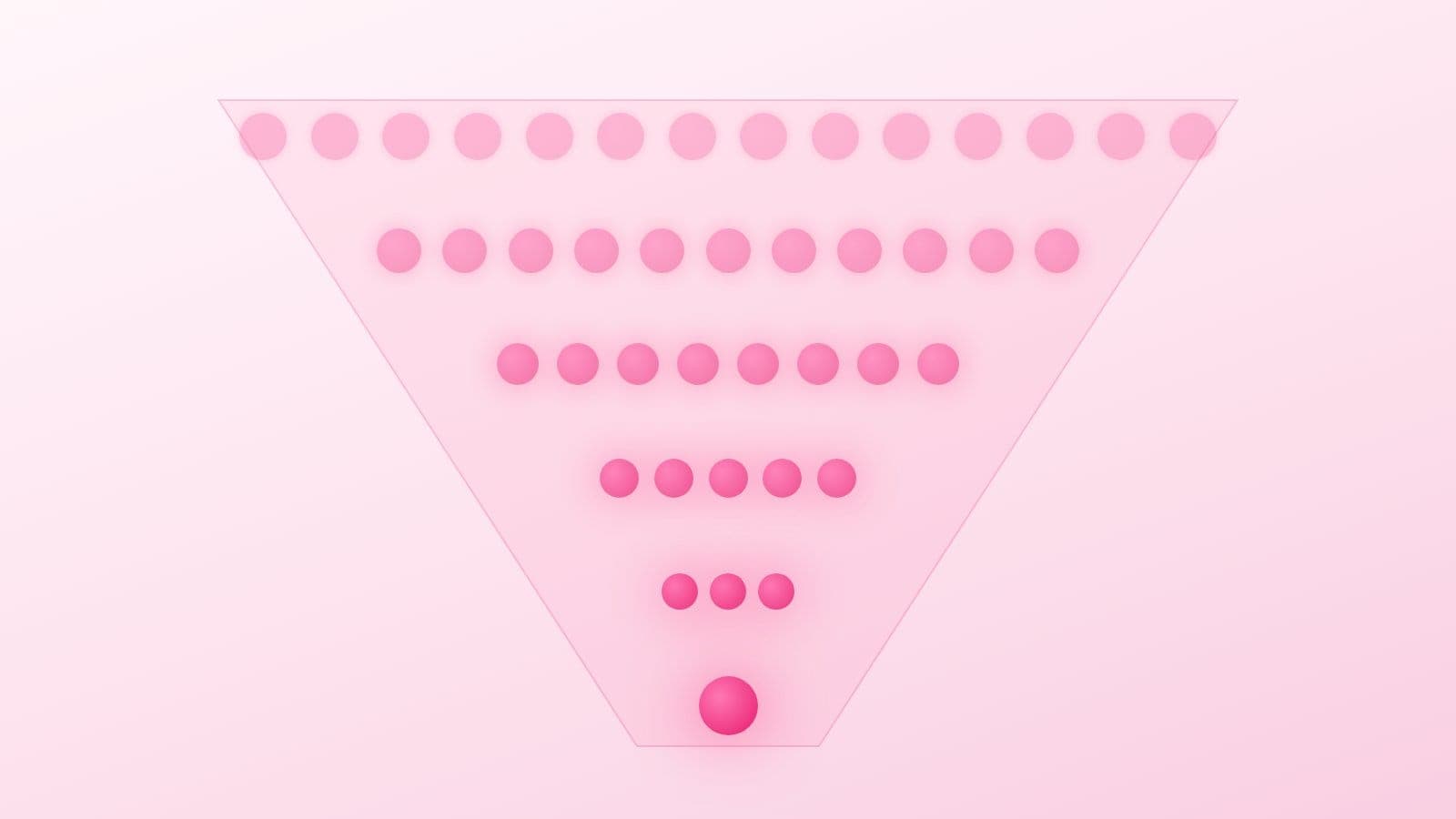

Brands choose influencers in stages, and most creators are cut before a human opens their profile. A filter narrows the pool by category, city and follower band. Then engagement rate and audience quality decide the shortlist, in that order. Price and reliability decide the final booking.
Almost everything written about this is written for brands. This is the same process seen from the other side, from inside a marketplace where we watch the filters run.
What do brands actually rank highest?
Engagement rate first, audience quality second. The State of Influencer Marketing in India report by EY and Collective Artists Network found Indian brands prioritise engagement rate and the quality of the target audience when selecting influencers. Follower count is not absent from the process, but it is used as a coarse band to filter on rather than as the number that wins the deal.
That is the stated preference. The revealed preference matches it. In the Influencer Marketing Hub Benchmark Report 2026, a survey of more than 600 respondents, marketers planning to expand their use of micro creators were 52.83 percent and nano creators 51.43 percent, while macro creators sat flat at 20.59 percent expanding against 20.58 percent contracting. Budget is moving down the follower ladder, not up it. We covered why in the real data on micro versus macro creators in India.
Stage one: are you even in the pool?
This is the stage nobody writes about, and it removes more creators than every other stage combined. A brand does not scroll through everyone. It sets a filter: this category, this city, this follower range, and looks at what comes back. If your profile is missing any field the filter reads, you are not rejected. You are absent.
We can put a number on that because we watch it happen. On Qolab as of 22 August 2026, 428 creators had signed up. 169 had connected their Instagram account. 110 were visible when a brand filters by city and category. So of everyone who joined, roughly one in four is findable by the brands already searching.
The gap between 428 and 110 is not a talent gap. It is fields left blank. A creator with 40,000 real followers and no city set loses to a creator with 8,000 who filled the form, every single time, because the second one appears in the list and the first one does not.
Stage two: does the account read as one thing?
It needs to. Once the list comes back the brand scans it fast, looking for a reason to keep or drop each row, and the fastest reason available is coherence. A feed that is clearly about food, or skincare, or motorcycles, survives the scan. A feed that is a bit of everything does not, because the brand cannot picture where their product would sit in it.
Category concentration matters here in a way most creators never consider. Among connected creators on Qolab in August 2026, 86 listed Lifestyle and 75 listed Fashion. Automotive had 5. Business had 6. Education had 6. Creators can pick more than one category, so these overlap, but the shape is clear: the broad lanes are crowded and the specific ones are almost empty.
If you are the fourth Lifestyle creator in your city, you are competing on presentation. If you are the only Automotive creator in your city, you are the list.
Stage three: do the numbers hold up?
This is where the shortlist gets short. The brand stops looking at how many people follow you and starts looking at whether those people are real and whether they respond. Fake or bot followers accounted for 56.5 percent of all fraud and quality issues marketers reported in the Influencer Marketing Hub Benchmark Report 2026, so this check is no longer something only large brands run.
What they are looking for is consistency: engagement that moves with follower count, comments that read like people, reach that does not swing wildly between posts of the same type. The specific checks are the ones we wrote up in the ten-minute fake-follower check brands run, and it is worth reading the brand-side version so you know what your own profile looks like under it.
Two things follow from this. First, a bought follower is worse than useless here, because it lowers the ratio the brand is actually measuring. Second, a small honest account passes this stage more easily than a large inflated one, which is most of the answer to how many followers you actually need.
Stage four: would their product look right in your feed?
Now a human is genuinely looking. They are checking whether your last few posts could hold their product without the whole thing feeling like an advertisement dropped into someone else's life. Tone, lighting, the language you use, whether you have talked about this category before at all.
This stage rewards having opinions in your niche. A creator who reviews things, compares things, or explains things has already demonstrated that a brand mention will sound normal coming from them. A creator whose feed is entirely trending audio has not, through no fault of the content.
Stage five: price, and whether you reply
Price is the last filter, not the first, and it is more flexible than creators assume. The EY and Collective Artists Network report found 71 percent of Indian brands pay influencers on a fixed-fee model against 29 percent using performance-linked arrangements. A fixed fee means there is a budget line with a number on it, and your rate is being checked against that line rather than against other creators.
Speed matters more than most creators believe at this point. The brand has a campaign date. Of the seven brand invitations that have reached an outcome on Qolab so far, four were accepted, and the accepted ones were answered in hours rather than days. That is a small sample and we will not dress it up as a benchmark, but the direction is the one you would expect: an offer sitting unopened for a week is an offer the brand has already routed to somebody else.
What to fix this week
- Fill in your city and your categories. This is the single step that decides whether you appear in searches at all.
- Connect your Instagram so your reach and engagement numbers are verifiable rather than claimed.
- Pick the narrowest category that is honestly true of your feed, not the broadest one that might catch more brands. Broad is crowded.
- Make your last nine posts read as one subject. A brand judges coherence from the grid, not from your bio.
- Answer offers the same day. If you plan to negotiate, negotiate fast, and pair it with a clear rate using our templates for pitching brands directly.
None of this is about deserving the deal more. It is about surviving five filters that run in a fixed order, four of which you can influence in an afternoon.
Qolab is where Indian creators get found by brands. Connect your Instagram, get a profile brands can search by niche and city, see a fair rate band for your account, and keep payments held safely until you deliver. Sign up free.