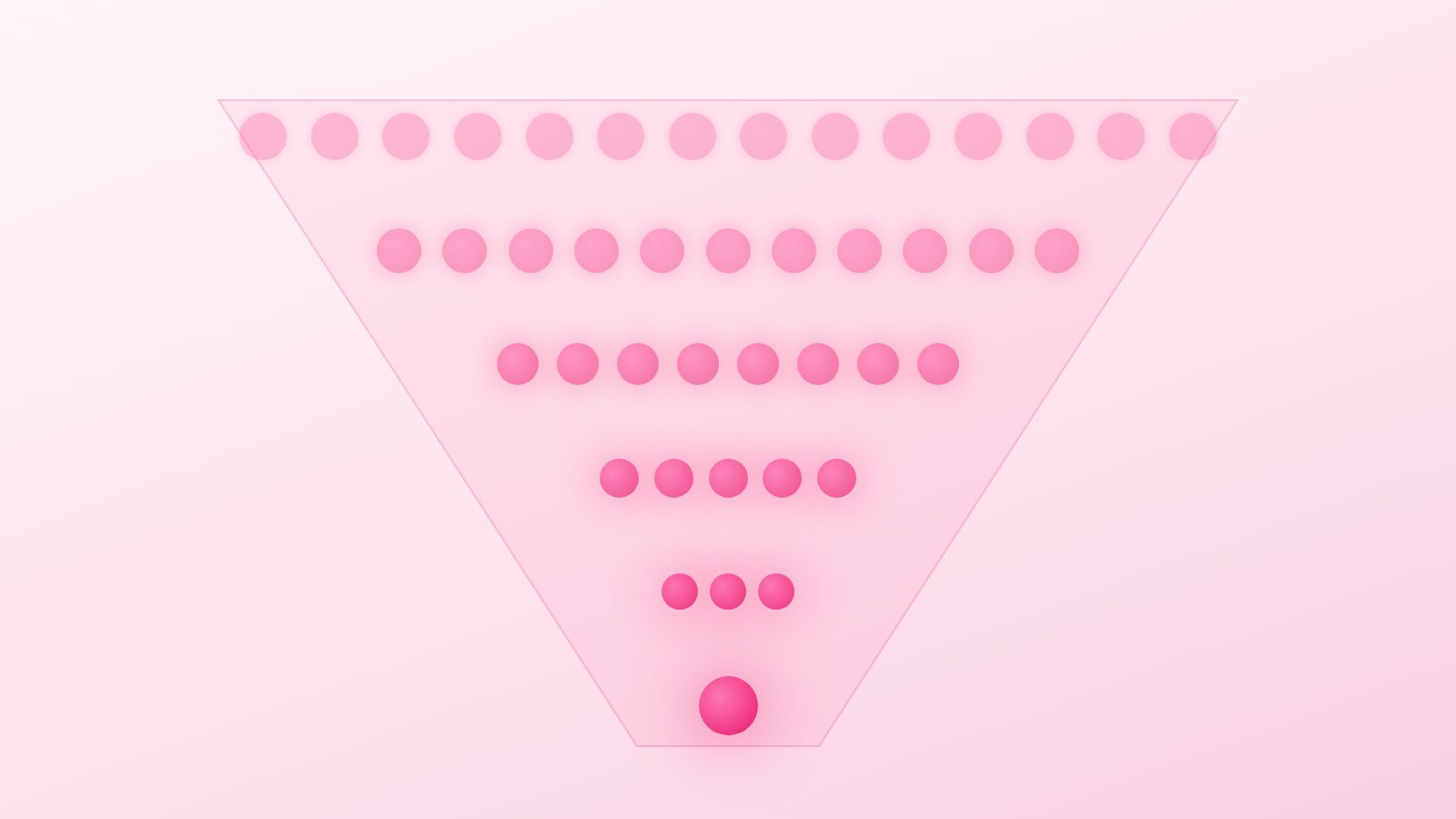
India's creator economy has 2 to 2.5 million active creators, by BCG's count, and only 8 to 10 percent of them monetise their content effectively. That is roughly 1.6 lakh to 2.5 lakh people earning properly from content. Most of the money sits with a small top tier, and most creators are small accounts still working out how to be paid.
That is the honest version. The headline version quotes crores of creators and hundreds of billions of dollars, and both kinds of number are real. They just measure different things. This post walks down the funnel one step at a time, says where each figure comes from, and ends with what it means if you have a few thousand followers today.
How many creators are there in India?
It depends on the definition, and the gap is large. BCG's report "From Content to Commerce", launched at the WAVES summit in May 2025, counted between 2 and 2.5 million active creators, which it defined as people with more than 1,000 followers who regularly produce digital content, as reported by DD News at the launch.
A year later, Kofluence's Decoding Influence 2026 report put India's active creator base at 4.0 to 4.4 million professionals, 3.3 to 3.7 million of them on Instagram, according to the report's release in May 2026. Kofluence built that from 750,000 creators on its own platform, a survey of more than 1,000 creators with at least two years of monetisation, and BCG and EY-FICCI data.
You will also see far bigger figures, such as 10 crore creators. We could not trace that number to a published method, and it cannot be a count of active creators on either definition above. Treat it as "people who post", not "people in the creator economy".
How many Indian creators actually earn?
Far fewer. BCG found that only 8 to 10 percent of active creators monetise their content effectively. On BCG's own count, that is roughly 1.6 lakh to 2.5 lakh people (our arithmetic: 8 percent of 2 million at the low end, 10 percent of 2.5 million at the high end).
Kofluence offers a second, stricter marker. 15.2 percent of India's active creators are now registered as a business entity or a GST individual. Registration is what larger brands increasingly ask for before signing a contract, so it is a fair proxy for "runs this as a business". If you are near that line, our guide to GST for influencers in India explains when registration becomes compulsory.
How much does the creator economy earn in total?
The big totals are about influence, not pay. BCG estimates that creators influence more than 350 billion US dollars of consumer spending in India every year, and that the ecosystem's direct revenues are 20 to 25 billion US dollars, rising to 100 to 125 billion by 2030.
The figure closest to a creator's own income is brand spend on influencer marketing, because that is the pool brand deals are paid from. Kofluence puts it at ₹3,000 to ₹3,500 crore in 2025, growing at 22 percent a year to ₹4,500 to ₹5,000 crore by 2027. For more figures with their sources, see our influencer marketing statistics for India.
Why do so few creators earn properly?
Because creator income is concentrated everywhere, not just in India. CreatorIQ's State of Creators 2026, a survey of 5,095 creators across 100 regions released in August 2026, found that 67 percent earned less than 10,000 US dollars a year from content, that for 62 percent it was not their main income, and that just under 5 percent earned more than 100,000 US dollars.
The same study found that follower count, more than engagement, had the strongest link to what creators earn, even though brands say they choose on engagement and fit. That is the gap a small creator lives in: brands say they want your engaged audience, then budgets follow the biggest numbers.
Three practical things keep most creators below the line:
- No written rate. A creator without a rate card takes whatever is offered, often a product instead of money.
- No proof brands can check. A follower count alone is easy to fake, so careful brands discount it.
- Deals that never get paid. Late or missing payments push people to quit before the work compounds.
Where do nano and micro creators fit?
They are most of the market, not the edge of it. In Kofluence's 2026 survey, 61.1 percent of creators had between 1,000 and 10,000 followers. Kofluence also found Tier 3 and Tier 4 city creators engaging at 4.5 to 5.5 percent, with 62 percent of creators reporting more regional and vernacular briefs.
Qolab's own creator base has the same shape. Of 550 creators on Qolab whose follower counts we read straight from Instagram on 1 October 2026, 396 had at least 1,000 followers. Of those, 200, about half, had under 10,000, and 325, or 82 percent, had under 50,000. Only 4 had more than 500,000.
That matters for earning because small accounts tend to have the most engaged audiences, and engagement is what a brand's money actually buys. Our post on how many followers you need for brand deals sets out what is realistic at each size.
What does this mean if you are a small creator?
The step from "posts regularly" to "earns" is narrower than the headlines suggest, but it is not about follower count alone. The creators in that 8 to 10 percent tend to have three things the others do not: a stated price, proof of their audience that a brand can check, and a way to get paid reliably.
None of those need 100,000 followers. A creator with 4,000 engaged followers in one city and one niche can have all three this month. The full sequence, from first pitch to repeat deals, is in our guide to getting brand deals as a small creator.
Watch the formal side too. As brands ask for GST registration and written contracts, being organised becomes part of the job. The 15.2 percent figure will rise, and the creators inside it will get the steadier deals.
If you want those three things in one place, a creator profile on Qolab is free, shows brands your rate and your audience read straight from Instagram, and holds the brand's payment before you start any deal.