A UGC creator is paid to film content a brand keeps and runs as its own advertising, not to post to their own followers. Becoming one in India takes three things: a small portfolio of sample videos, a rate built on production time and usage rights, and a list of brands you approach directly.
Follower count is not the entry requirement, which is why the job attracts people with small accounts. What it does require is being genuinely good on camera and reliable about deadlines, because the brand is buying a file, not a moment.
Most guides on this topic open with an income promise. This one opens with the numbers we can actually source, including our own marketplace data, because the gap between the figures circulating online and the Indian market is the most useful thing to know before you start.
What does a UGC creator actually do?
You film short videos for a brand: an unboxing, a testimonial to camera, a how-to, a before and after. You send the files. The brand edits them, runs them as ads, posts them on its own account, or puts them on a product page. Your name is often nowhere on the finished ad. That is the job, and it is closer to freelance video production than to influencing. Our brand-side breakdown of UGC versus influencer marketing covers the same split from the buyer's point of view.
The practical consequence is that you are judged on the footage. Lighting, clear audio, a face that holds attention, and a first three seconds that stops a scroll. None of that is measured by your follower count.
Do you need followers to become a UGC creator?
No. A UGC creator is hired for the video, not the audience, so a private account with 300 followers is not a disqualification. The catch is that with no audience you also have no shop window, so a portfolio has to do the work a follower count would otherwise do.
Demand for this specific job is rising rather than flat. In the Influencer Marketing Hub Benchmark Report 2026, a survey of more than 600 respondents published in May 2026, 50 percent of marketers planned to expand their use of UGC creators, split between 35.71 percent increasing work they already do and 14.29 percent starting for the first time. That second group matters most to a beginner: those brands have no roster and no incumbent to displace.
What do UGC creators charge in India?
There is no published Indian rate card for UGC that we would trust, so start from a number we can verify. On Qolab in August 2026, 183 Indian creators with a connected Instagram account listed a rate for a reel on their own page.
Those are influencer rates, not UGC rates. They include the creator's audience. Read them as evidence of what Indian creator work is currently valued at rather than as your quote, because a UGC price is built from a different base: your shooting time, the number of finished videos, the number of revisions, and what the brand is allowed to do with the footage afterwards.
Price the work, then price the rights separately. A single video shot in your kitchen and used once on a brand's own Instagram is not the same product as the same video running as a paid advertisement for six months. Our reel pricing guide for India works through the same reasoning for posting work, and the structure transfers cleanly.
How do you build a UGC portfolio with no clients?
By filming for products you already own. Nobody expects a first portfolio to be paid work and brands know it. What they are checking is whether you can hold a camera steady, light your face, and sound like a person.
- Pick two or three categories you genuinely use, for example skincare, kitchen tools or fitness gear. Specialising makes you easier to find and makes the footage look unforced.
- Film four to six samples across different formats: an unboxing, a straight testimonial to camera, a short how-to, and one problem-and-solution ad.
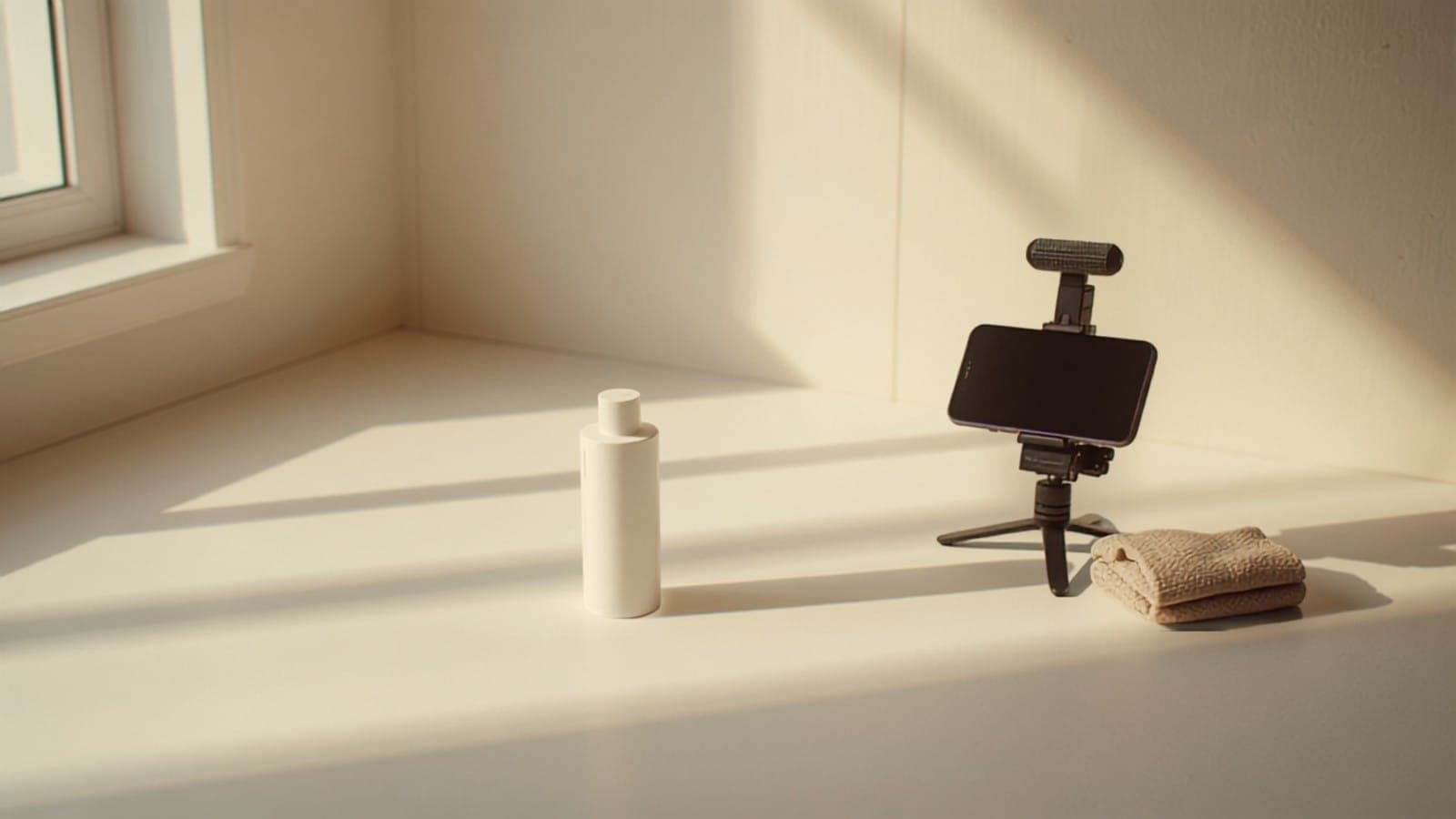
- Shoot vertical, in daylight near a window, with the phone at eye level. Buy a clip-on microphone before you buy anything else, because clear audio is the cheapest quality upgrade available.
- Keep every raw file. Brands often ask for a different edit of the same footage, and re-shooting for free is how a paid job quietly becomes an unpaid one.
- Put the finished videos in one public folder or a single page with your rates, turnaround time and contact details. That page is your portfolio, and it replaces a media kit.
How do you get your first UGC clients in India?
Directly, and in volume. Indian brands rarely advertise UGC briefs publicly, so first clients come from approaching small and mid-sized D2C brands yourself, one message at a time, with the portfolio link in the first message rather than after a reply. Kofluence found that 93.1 percent of Indian brands treat Instagram as their primary creator channel, which is why a direct message there still reaches the person who decides.
- Approach the brands whose products you already filmed for your portfolio. You are showing them work about them, which is a far stronger opener than a rate card.
- Target brands small enough to reply. A company still running its own Instagram account is reachable. A company with an agency between you is not, at least not yet.
- Lead with what you are handing over: number of videos, formats, turnaround, and the usage terms. Vague pitches get read as expensive.
- Follow up once, about a week later. Most creators send one message and stop, which is exactly why the ones who follow up get the work.
The wording matters less than people think, but the structure does not. Our three pitch templates for Indian creators are written for influencer work and adapt directly: replace the paragraph about your reach with a line about deliverables and rights.
Is UGC creation a realistic full-time income in India?
For a small number of people, yes. For most it is a second income that grows into retainers or into influencer work, and the headline monthly figures circulating online are not from any survey we could find. What is documented is the shape of the market. Kofluence's Decoding Influence: Annual Research Report 2026, published in May 2026, put India's creator base at 4.0 to 4.4 million active professionals and found that 15.2 percent are registered as a business entity or GST individual.
That last number is the honest picture. Roughly one creator in seven has registered the work as a business, even though the same Kofluence research found 46.3 percent describe themselves as full-time creators. Most of this market earns without any formal structure around it. Treat any promise of a fixed monthly income with the suspicion it deserves, and build the way a freelancer does: repeat clients first, retainers second, higher rates third.
Once money starts arriving regularly the paperwork becomes a real question, and it is worth an early conversation with a chartered accountant rather than a late one. This is general information, not tax advice, and your own position should be confirmed with a CA.
Where Qolab fits
Qolab is a booking marketplace for Indian creators, and deal terms are set per booking, so a brief where the brand keeps the footage is simply a different agreement from one where you post to your own audience. Two things help a new UGC creator either way: connecting your Instagram gives you a profile brands can search by niche and city, which does the job of a media kit without you maintaining one, and payments are held safely until you deliver.
It also puts you in front of brands you would otherwise have to find yourself. In August 2026 there were 470 creators signed up from 80 cities across 21 states, which is the pool a brand filters when it starts looking for someone to film.